HLTAID012
Provide First Aid in an education and care setting

Includes CPR

BOOK NOW

Select your Course

Select your Location

Or click here for

Fees

$135

Course duration

Online + 2 hours and 30 minutes
practical in class1 

Nationally recognised training

Same Day statement of attainment
 (certificate)2

1 All students must complete the online assessment prior to arriving at the face to face classroom session. 2 Certificates will be issued on the same day only when all course requirements have been successfully met.

For our refund and cancellation policy, please click here.

Official Statement of Attainment

Childcare First Aid Course

Learn the skills to Provide an Emergency First Aid response to a child in need. This unit applies to educators and support staff working within an education and care setting. This course includes a short online pre-class component.

Life Saving First Aid is a Registered Training Organisation No. 46460.

Childcare First Aid Course Information

This program is designed to equip participants with the skills and knowledge required to recognise and respond to a variety of illnesses and injuries, with an emphasis on life-threatening emergencies and basic emergency life support including providing cardiopulmonary resuscitation (CPR) on casualties within various contexts, specifically within the context of an education or care setting. It adheres to the guidelines set by the Australian Resuscitation Council (ARC) for First Aid and CPR application and is applicable to both workplace and community settings.

The information in this section is also available for download (Download HLTAID012 Course Outline)

Unsure this is the right course for you? Contact Us

HLTAID012 – Provide First Aid in an education and care setting (Release 2)
HLTAID011 – Provide First Aid (Release 1)
HLTAID010 – Provide basic emergency life support (Release 1)
HLTAID009 – Provide cardiopulmonary resuscitation (Release 1)

Performance evidence.

Evidence of the ability to complete tasks outlined in elements and performance criteria of this unit in the context of the job role.

There must be evidence that the candidate has completed the following tasks in line with State/Territory regulations, first aid codes of practice, first aid guidelines determined by the Australian Resuscitation Council (ARC) and other Australian national peak clinical bodies and workplace or site procedures:

  • managed, in line with ARC guidelines, the unconscious, breathing casualty including appropriate positioning to reduce the risk of airway compromise
  • managed, in line with ARC guidelines, the unconscious, non-breathing adult, including:
    • performing at least 2 minutes of uninterrupted single rescuer cardiopulmonary resuscitation (CPR) (5 cycles of both compressions and ventilations) on an adult resuscitation manikin placed on the floor
    • following the prompts of an automated external defibrillator (AED) to deliver at least one shock
    • demonstrating a rotation of single rescuer operators with minimal interruptions to compressions
    • responding appropriately in the event of regurgitation or vomiting
  • managed, in line with ARC guidelines, the unconscious, non-breathing child, including:
    • performing at least 2 minutes of uninterrupted single rescuer cardiopulmonary resuscitation (CPR) (5 cycles of both compressions and ventilations) on a child resuscitation manikin placed on the floor
  • managed, in line with ARC guidelines, the unconscious, non-breathing infant, including:
    • performing at least 2 minutes of uninterrupted single rescuer CPR (5 cycles both compressions and ventilations) on an infant resuscitation manikin placed on a firm surface
  • managed child casualties, with the following:
    • anaphylaxis
    • asthma
    • non-life-threatening bleeding
    • choking – child and infant
    • envenomation, using pressure immobilisation
    • fractures, dislocations, sprains and strains, using appropriate immobilisation techniques
    • minor wound cleaning and dressing
    • nosebleed
    • shock
  • responded to at least one simulated first aid incident that involves providing treatment for a child or infant contextualised to the candidate’s workplace or site, where the candidate has no knowledge of the casualty’s condition prior to starting treatment, including:
    • identifying the casualty’s illness or injury through history, signs and symptoms
    • using Personal Protective Equipment (PPE) as required
    • providing appropriate first aid treatment
    • conveying incident details to emergency services or advising casualty on any required post incident action
    • providing an accurate verbal and written report of the incident
    • reviewing the incident.

Knowledge evidence.

Demonstrated knowledge required to complete the tasks outlined in elements and performance criteria of this unit:

  • guidelines and procedures including:
    • ARC guidelines relevant to the provision of first aid to infants, children and adults
    • first aid guidelines from Australian national peak clinical bodies
    • potential incident hazards and risk minimisation processes when providing first aid
    • infection control procedures, including use of standard precautions and resuscitation barrier devices
    • requirements for currency of skill and knowledge
    • first aid codes of practice
    • appropriate workplace or site procedures relevant to the provision of first aid
    • contents of first aid kits
  • legal, workplace and community considerations, including:
    • first aid requirements for services under the Education and Care Services National Law
    • State or Territory regulations covering first aid in an Education and Care setting
    • duty of care requirements
    • own skills and limitations
    • consent, including situations in which parental or caregiver consent is required
    • privacy and confidentiality requirements
    • awareness of potential need for stress management techniques and available support for rescuers and children
  • considerations when providing CPR, including:
    • upper airway and effect of positional change
    • appropriate duration and cessation of CPR
    • appropriate use of an AED, including specific considerations when using an AED on children
    • safety and maintenance procedures for an AED
    • chain of survival
    • how to access emergency services
  • techniques for providing CPR to adults, children and infants including:
    • how to recognise that a casualty is unconscious and not breathing normally
    • rate, ratio and depth of compressions and ventilations
    • correct hand positioning for compressions
    • basic anatomy, physiology and the differences between adults, children and infants relating to CPR
  • signs, symptoms and management of the following in children and infants:
    • allergic reaction
    • anaphylaxis
    • asthma
    • non-life-threatening and life-threatening bleeding
    • breathing difficulties
    • burns
    • choking
    • diabetes
    • dehydration
    • drowning
    • envenomation – all current treatments
    • eye injuries
    • febrile convulsions
    • fever
    • fractures, dislocations, sprains and strains
    • head, neck and spinal injuries
    • hypothermia
    • hyperthermia
    • minor wounds
    • pain
    • shock
    • nose-bleed
    • poisoning
    • seizures
    • vomiting and diarrhoea
  • identification and management of a sick infant or child including:
    • general signs and symptoms of acute illness in children and infants
    • referral and advice services including recognition of signs or symptoms requiring immediate ambulance response
    • emergency action plans for known medical conditions including Asthma and Anaphylaxis
    • age appropriate communication and distraction techniques
    • first aider response to basic physiological differences in children.

Blended – 2 hour 30 minute practical review and assessment session.
Additional time is required for online learning and assessment (approx. 10 to 15 hours).

Face to Face – 8 hours 30 minutes knowledge and practical review and assessment session.
Additional time is required for new learners to do online introductory learning (approx. 10 to 15 hours).

Blended – online learning and knowledge assessment with an in classroom face to face practical session with skills assessment.

Face to Face – introductory online learning, only for students who have not studied the unit within last 5 years. Face to face classroom session including Knowledge and Practical reviews, and assessments.

Nil

N.B. – For students in face to face who do not want to do online pre-course work, evidence of competence in the unit within the last 5 years will be required.

Participants must:

  • have foundation skills in Language, Literacy and Numeracy. (ACSF 2 to 3)
  • be capable with online learning platforms and use of internet connected devices.
  • be capable of performing 2 minutes of CPR whilst kneeling on the floor
  • have a USI (Unique Identification Number)
  • For Face to Face students wanting to refresh their qualification or bypass introductory online learning, students will need to declare their ability to supply evidence of studying the unit within 5 years

On successful completion participants will be able to:

  • Recognise, assess and respond to an emergency situation, ensuring safety, assessing a casualty’s need for a First Aid response and/or CPR and seeking assistance from emergency services.
  • Perform CPR procedures and operate First Aid Equipment (including an AED) in accordance with ARC guidelines and manufacturers guidelines whilst displaying respect towards the casualty, using available resources to make them comfortable and monitoring them in accordance with first aid principles.
  • Communicate details of the incident, accurately to emergency services, parents or caregivers, regulatory authorities and workplace representatives in line with privacy and related regulations and workplace or site procedures.
  • Review the incident, recognising possibly psychological impacts, seeking help as required and contributing to a review of the first aid response as required.

This course can contribute to a broad range of qualifications.

This course contains the HLTAID009 unit which is recommended for attainment and refresh every 12 months by the National Model First Aid Code of Practice, and as such is desirable or even required by many roles in the workplace.

The units HLTAID010, HLTAID011 and HLTAID012 are first aid units which may be suitable and/or required by particular workplaces to address first aid requirements. As a first aid unit it is recommended for refresh every 36 months by the National Model First Aid Code of Practice.

This course contains the HLTAID009 unit which is recommended for attainment and refresh every 12 months by the National Model First Aid Code of Practice, and as such is desirable or even required by many roles in the workplace.

The units HLTAID010, HLTAID011 and HLTAID012 are first aid units which may be suitable and/or required by particular workplaces to address first aid requirements. As a first aid unit it is recommended for refresh every 36 months by the National Model First Aid Code of Practice.

Life saving First Aid has regular scheduled sessions for this unit, please refer to the calendar on our website for details of available sessions. Participants can enrol online and should enrol at least 48 hours prior to their selected session time in order to allow sufficient time to complete the online learning and knowledge assessment component prior to attending the practical session.

If scheduled sessions are not suitable for your workplace, contact our team as a customised course / group booking may be possible to suit your needs.

Life Saving First Aid does not issue statement of attainments that are achieved wholly through recognition of units completed at other RTOs. In plain English, this means we do not issue credit transfer for stand-alone units, including HLTAID012 – Provide First Aid in an education and care setting, HLTAID011 – Provide First Aid, HLTAID010 Provide basic emergency life support and HLTAID009 Provide Cardiopulmonary Resuscitation.

Recognition of Prior Learning (RPL) is available for this unit of competency. It is important to note that RPL is an assessment process, and regardless of how skills and knowledge have been attained, assessment must be conducted with the same rigour as any other assessment process.

RPL allows students to reduce or bypass the learning part of a program because they already have the knowledge and skill to demonstrate competency. It does not reduce the assessment requirements for the program.

Refer to the Recognition of Prior Learning Policy on our website or within our Student Handbook for details of our RPL process.

Total tuition fees for this Course are $135*

There will be no additional costs for RPL applications and assessment as these are included in the total tuition fees for this Course.

Note: No GST is applicable to National Recognised Training. Students will only receive their Testamur (certificate) once all course requirements have been met and all fees have been paid in full.

More information regarding Life Saving First Aid’s fees and refunds (including payment terms) can be found in the Student Handbook within Life Saving First Aid’s Fees, Charges & Refunds Policy or on the website.

A $10 Certificate Printing and Postage Fee is additional if a hard copy statement of attainment is required. (An electronic copy is emailed in pdf format for no additional charge)

A $50 Resource Printing, Postage and Administration Fee is additional if the participant requires hardcopy versions of Learner Guide, Assessment Booklet and Supplementary Resources.

*This fee is for our publicly listed courses available for enrolment via our website. This fee may be negotiated for large groups.

Tuition fees include access to all online (electronic versions of) content required for knowledge learning and assessment.

If necessary as mentioned in fees section, a hardcopy learning resources kit can be printed and posted to participants.

Students will be responsible for and required to have their own internet connected device (and internet connection) required to access and complete online learning and assessment via the Axcelerate platform if electing to do the pre-course work via the online platform.

This unit has a knowledge assessment which comprises of a mixture of multiple choice, selectable fill in the blank, and statement ordering style questions. This assessment is normally completed online via the Axcelerate LMS.

N.B. If the student elects the hardcopy assessment booklet this knowledge assessment is completed within the booklet by circling selections or writing in the number of the order.

The practical or skills assessment session contains a variety of scenario based simulations where the participant must apply knowledge and skills to the simulation to provide the correct response in accordance to observation checklists. The online learning material goes through the correct procedures required by the simulations, and your trainer / assessor will demonstrate skills and allow for ample practice prior to assessment.

Student’s can request a pre-enrolment consultation/interview to determine support requirements. Life Saving First Aid will assess and determine if a student requires additional support to assist them with completion of the Qualification. This will include a Language Literacy and Numeracy (LLN) assessment prior to enrolment.

All students will be provided with options of learning support by Life Saving First Aid to ensure students are adequately supported to ensure quality training outcomes.

For further information regarding the student support options, please refer to the Student Handbook prior to enrolment.

Not applicable

A student must be found to have the necessary LLND requirements as per entry requirements.

A student must have a USI, and be able to complete 2 minutes of uninterrupted CPR whilst kneeling on the floor to be found competent in this unit.

A student can apply for this course by completing an enrolment form. This can be done:
1) Online via our website
2) Via a hardcopy enrolment form

Hardcopy enrolment forms are available and can be submitted via, post, email or in person at our locations.

THIS DOCUMENT MUST BE READ IN CONJUNCTION WITH LIFE SAVING FIRST AID’S STUDENT HANDBOOK TO ENSURE THAT STUDENTS ARE ADEQUATLY INFORMED PRIOR TO ENROLMENT REGARDING LIFE SAVING FIRST AID’S POSITION ON COMPLAINT AND APPEAL HANDLING, STUDENT SUPPORT, RECOGNISED PRIOR LEARNING (RPL), CREDIT TRANSFERS AND FEES, CHARGES AND REFUNDS.

Childcare First Aid Course Locations

Our convenient training centres can be accessed by a different number of trains, trams and buses. Drivers have a range of free and paid parking options available in every training location.

First Aid courses are available every day, 7 days a week at every location
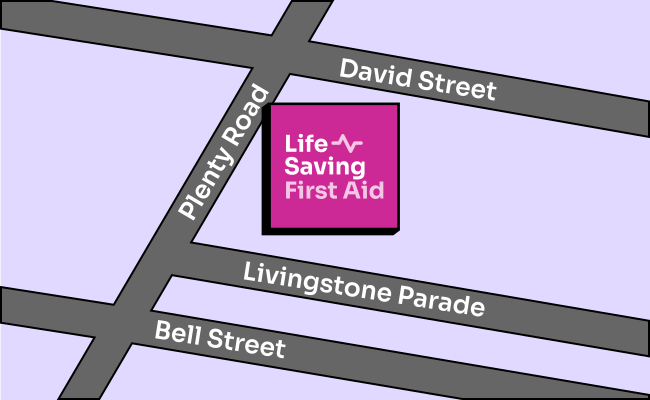
Life Saving First Aid Preston

Preston

282 Plenty Road, Preston
VIC 3072 Google Maps »
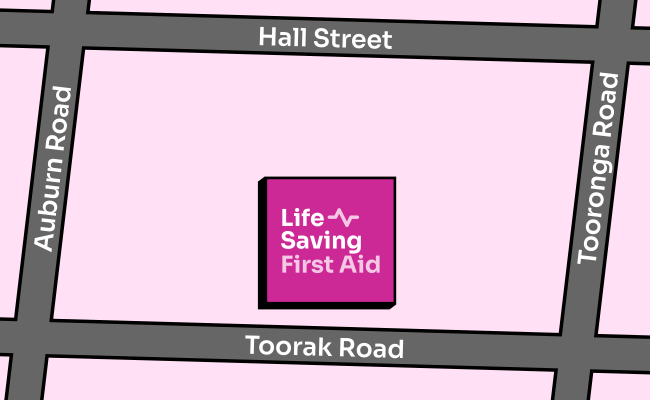
Life Saving First Aid Hawthorn East

Hawthorn East

771 Toorak road, Hawthorn East
VIC 3123 Google Maps »
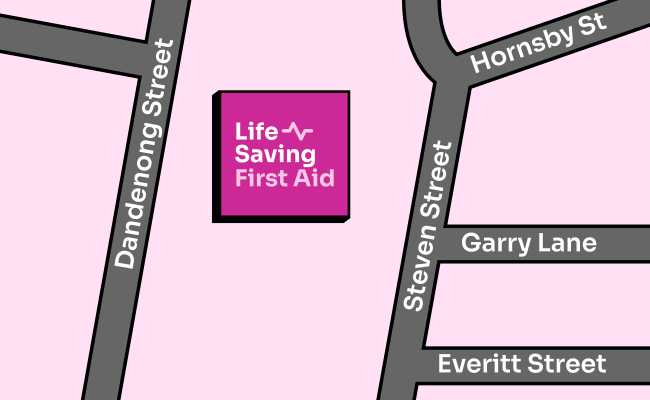
Life Saving First Aid Dandenong

Dandenong

13 Dandenong St, Dandenong
VIC 3175 Google Maps »

Life Saving First Aid Deer Park

Deer Park

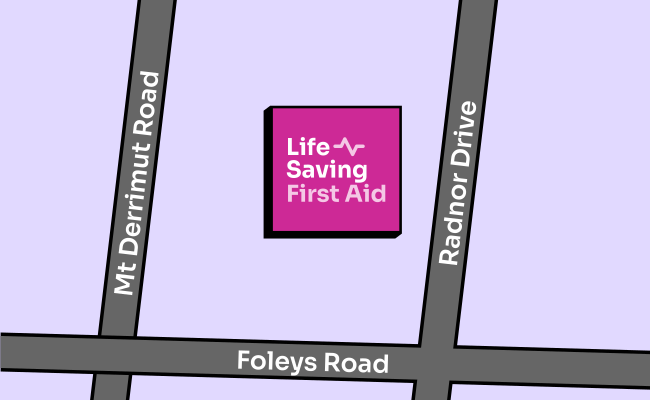
21 Radnor Drive, Deer Park
VIC 3023 Google Maps »

Life Saving First Aid Geelong

Geelong

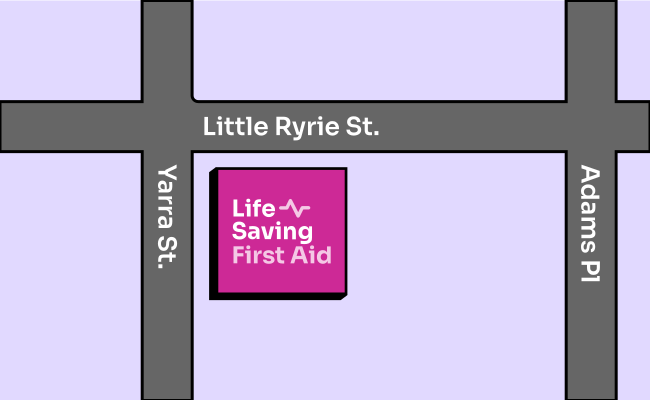
109 Yarra Street, Geelong
VIC 3220 Google Maps »

Life Saving First Aid Croydon

Croydon

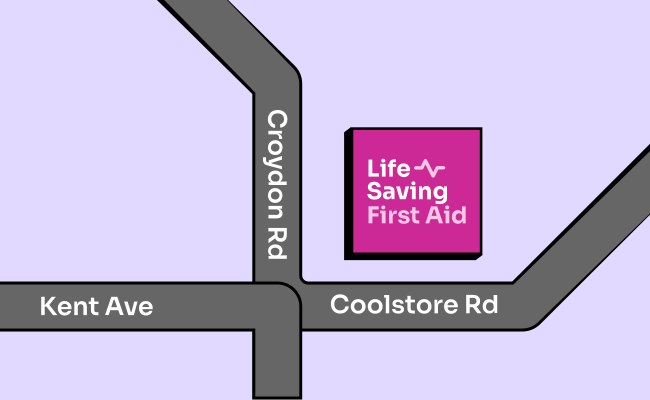
4-6 Croydon Rd, Croydon
VIC 3023 Google Maps »

Life Saving First Aid Pakenham

Pakenham

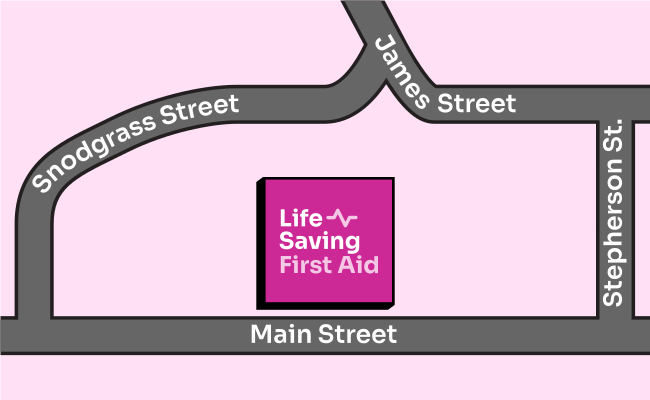
36B Main Street, Pakenham
VIC 3810 Google Maps »

Other Courses We Offer

HLTAID009

Provide Cardiopulmonary Resuscitation
$ 55
  • Online + 45 minutes practical in class.

HLTAID014

Provide Advanced First Aid
$ 240
  • Online + 6 hours and 15 minutes practical in class

HLTAID011

Provide First Aid (includes CPR)
$ 95
  • Online + 2 hours practical in class.

HLTSS00068

Occupational First Aid Skill Set
$ 490
  • Online + 8 hours and 20 minutes practical in class

Baby First Aid Course

for first time parents
$ 60
  • Non-accredited baby first aid course
  • *It does not replace the HLTAID012 industry standard qualification

HLTAID013

Provide First Aid in remote or isolated site
$ 240
  • Online + 6 hours and 15 minutes practical in class

HLTAID012

Provide First Aid in an Education and Care Setting (includes CPR)
$ 135
  • Online + 2 hours and 30 minutes practical in class

HLTWHS005

Conduct Manual Tasks Safely
$ 130
  • Online + 2 hours practical in class

HLTAID009

Provide Cardiopulmonary Resuscitation
$ 55
  • Online + 45 minutes practical in class.

HLTAID011

Provide First Aid (includes CPR)
$ 95
  • Online + 2 hours practical in class.

HLTAID012

Provide First Aid in an Education and Care Setting (includes CPR)
$ 135
  • Online + 2 hours and 30 minutes practical in class

HLTAID014

Provide Advanced First Aid
$ 240
  • Online + 6 hours and 15 minutes practical in class

HLTSS00068

Occupational First Aid Skill Set
$ 490
  • Online + 8 hours and 20 minutes practical in class

HLTWHS005

Conduct Manual Tasks Safely
$ 130
  • Online + 2 hours practical in class

HLTAID013

Provide First Aid in remote or isolated site
$ 240
  • Online + 6 hours and 15 minutes practical in class

Life Saving First Aid is a Registered Training Organisation No. 46460. You can find the Student Handbook by clicking here

Childcare First Aid Course

Childcare First Aid FAQ

Life Saving First Aid offers the “Provide First Aid in an Education and Care Setting” course for just $135, including our CPR course. Renowned for its cost-effectiveness, Life Saving First Aid is dedicated to providing high-quality lifesaving training to as many people as possible.

Yes, your “Provide First Aid in an Education and Care Setting” certificates do expire. They are recognised as a First Aid practice, so according to Australian Resuscitation Council (ARC) guidelines, and SafeWork Australia’s model Code of Practice: First Aid in the Workplace, refresher training in First Aid must be completed every three years.

This unit covers the skills and knowledge required to provide a first aid response to infants and children. Specifically, how to respond to an emergency, apply appropriate first aid procedures, communicate details of an incident, and review the incident. This course also includes our CPR course.

No, if you hold HLTAID004 you will need to upgrade to HLTAID012 as this is the newer version and has superseded HLTAID004.

There are no prerequisites for the HLTAID012 – Provide First Aid in an education and care setting course however participants are required to have a minimum level of language, literacy, numeracy and employment skills to be allowed admittance to this course.

Finding available course dates and times for your selected course and location...